Zen Talk: One Thing at a Time
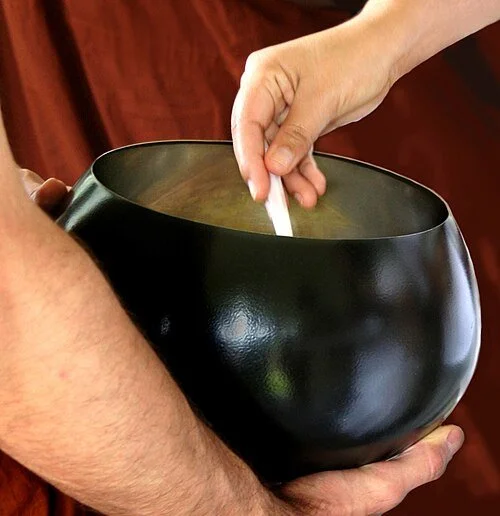
Many students of Zen are familiar with the koan, “Joshu’s ‘Wash Your Bowls,’” which appears in the Mumonkan and other collections:
A monk asked Joshu in all earnestness, “I have just entered the monastery. I beg you, master, please give me instructions.”
Joshu asked, “Have you eaten your rice gruel yet?”
The monk answered, “Yes, I have.”
Joshu said, “Then wash your bowls.”
The monk attained some realization.
The exchange seems simple.
In koans, these nameless monks are stand-ins for us. They are seekers. They have deep questions.
What is Buddha? What is the way?
This monk wants to know what it’s all about.
In response, Joshu asks if he has had his breakfast, some rice porridge, then directs the monk to the task that would ordinarily follow that.
For the monk, Joshu’s words felt like a slap. Joshu is saying, come back to the moment, monk.
Breakfast was so five minutes ago. This is now.
And even this now is over. Now is always moving.
The past is dead. Wash it away. Keep washing.
We are told that the monk then had a realization. An insight. Some type of awakening.
A straightforward interpretation of Joshu’s lesson for the monk is this:
Do one thing at a time. Eat your breakfast. Then wash your bowl.
But the koan has more layers than that. Like our lives, koans are always moving. I first worked with this one more than 10 years ago, and I am still peeling away the layers.
It came back to mind when I started to write this talk, which I thought was going to focus on how my first year of retirement had affected my Zen practice.
The koan turned my talk into something else.
Back when I first studied it, I imagined trading places with this monk.
I was still deep in my career as a newspaper editor. The job was engaging and rewarding, but also stressful. The hours were long and unpredictable. I was sometimes managing smart but difficult people. The news itself was often upsetting. Divisive politics. Mass shootings. Wars. Life and death. Suffering. Always moving.
How peaceful it sounded to live a simple monastic life, taking care of ordinary daily tasks. Sleeping when I was tired, waking up to chant and meditate, eating breakfast, washing my bowls and other chores. Silence. Solitude.
No commute.
No urgent emails.
No phone calls at all hours.
No news alerts.
No memos. No meetings.
No multi-tasking.
I wanted the space to experience life the way Suzuki Roshi once described it. My teacher, Sensei Marisa Cespedes, quoted him in a recent talk: “Just to be alive is enough.”
All of us have had a taste of this. Maybe on a night of sitting together like this one. Or at a longer retreat, a full day zazenkai, or a longer weekend or weeklong sesshin. Maybe when our daily practice at home just clicks.
In sesshin, we are single-tasking.
We walk slowly to and from the zendo in silence, no chitchat, no doomscrolling on our phones. At meals, we chant, we get our food, we eat in silence, we clean up. One thing naturally follows another, like the foot before and the foot behind in walking.
Retreats can be mentally, emotionally and physically challenging. But afterward, I am usually more grounded… Calmer.
My resting heart rate is measurably lower.
I sleep better.
The chatter in my head is quieter.
Difficult encounters with difficult people are easier.
I appreciate the world and its everyday wonders. Being alive is enough.
How is it for you?
These are all side effects. I try not to make them into goals. But I notice and appreciate them. Allow them.
Now, I probably wouldn’t have lasted long in a Chinese monastery a thousand years ago. I like a world with central heating and vaccines and Tylenol.
I would get tired of eating rice gruel every morning.
That’s OK.
The modern world needs lay Zen practitioners more than it needs monastics or hermits….
If we are going to awaken all beings, and save the planet, not to mention resist fascism, we need to be in the streets, not the mountains.
And Joshu’s “clean your bowls” also works for lay people, not just monks.
When you are done making a mess, clean it up. The people around you will appreciate it. You are putting good karma out into the world. That’s enough. Don’t wait for a medal or a parade. Just do it.
It's all there in our the work practice guidelines of our zendo: “Let the action be the achievement. Be present. Mindful. Pay attention. Return to the task at hand when your mind wanders. Finish what you begin now. Not later.”
It’s also in a BBC clip that many of us have watched at the start of our weeklong retreats. A barefoot forest monk is doing slow kinhin.
The voice-over….
“When you are walking, know that you are walking. When you are sweeping, know that you are sweeping. When you’re worrying, know that you are worrying. And when you’re breathing, and you must be breathing, know that you are breathing.”
After a long retreat, when we return to our busy lives, the afterglow of intensive practice tends to wear off after a while. Is there a way to hang onto it?
This might be a trick question.
In 2019, my first teacher here, Roshi Gregory, gave a series of two talks called “Making Your Day Your Monastery.” His advice was to make time for silence and solitude every day.
He suggested as many as four hours a day.
When I first heard that, I thought. Four hours?! That’s a lot. Maybe when I retire.
But I tried then. I started walking back and forth to the office instead of taking the subway. I found solitude in workouts and bike rides. I scheduled blocks of me tine on my calendar. I started taking lunch breaks and typing breaks.
I stopped a habit of always putting on the TV, a podcast or streaming music in the background. If you’re going to listen to music, drop what you’re doing and listen to music. I tried to end other bad habits, like watching TV while eating, or scrolling on my phone in meetings. (I wasn’t always successful as my family and coworkers know.)
When I multi-task, I end up half-assing things. I make more mistakes. I end up missing things people say. I end up redoing things.
And I’m just more disconnected from reality.
When the pandemic happened, I discovered even more time. Part of it was working from home without a commute, but part of it was driven by the fear that we might all be going to die, sooner than expected.
In that context, it was easier to set boundaries and push away unreasonable requests outside working hours.
Now that I’m retired, my schedule is mostly my own. And so is my energy, and stamina, which was declining — very slowly but noticeably to me — as I grew older.
I can now devote more energy to my life, which is my practice.
I can have a leisurely breakfast, which I cook. I have fewer excuses when it comes time to sit in meditation longer or to work out that take care of this aging body. I have time for personal writing, hobbies, reading books…
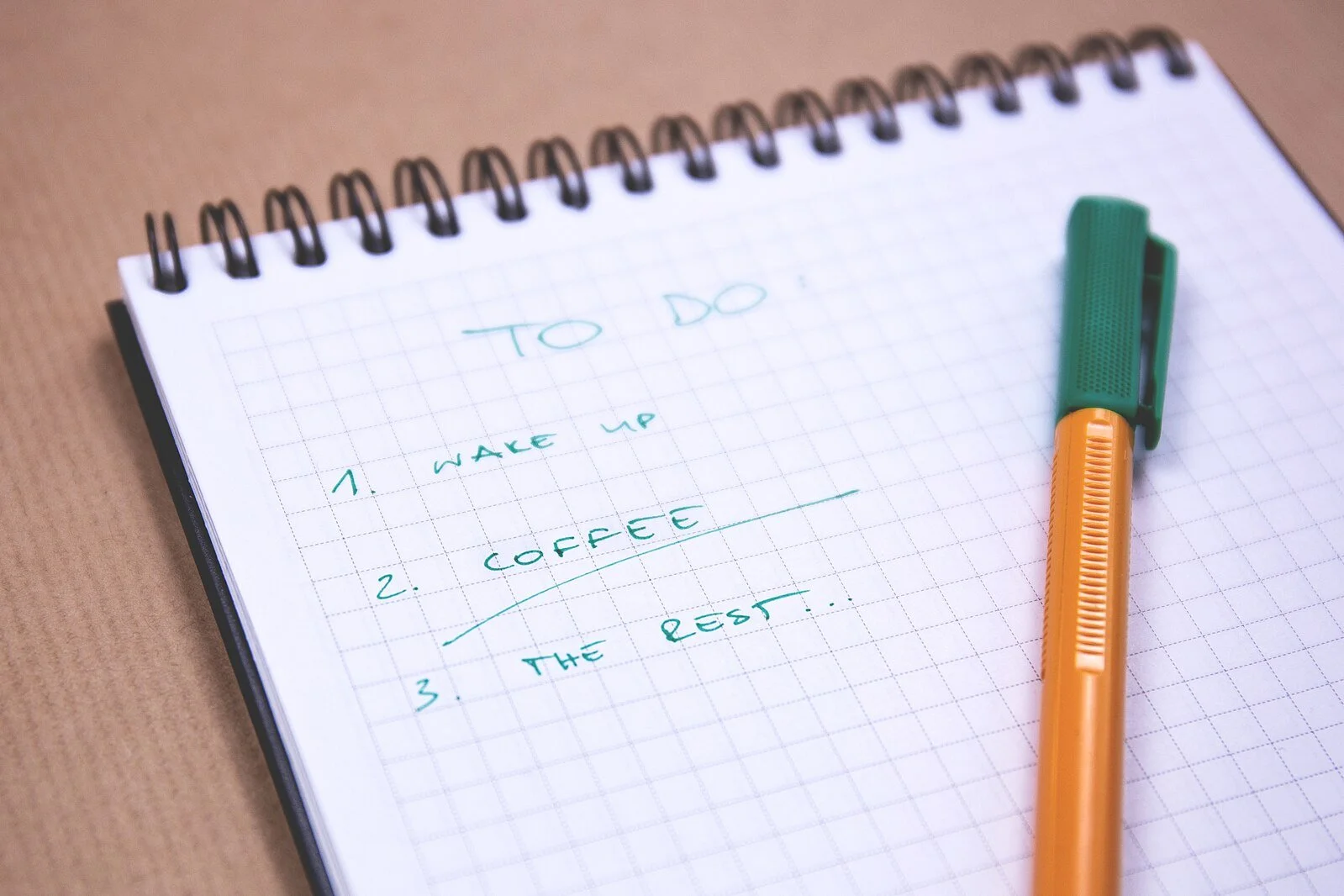
I am checking boxes on a household to-do list that I had neglected for a long time.
Now, I didn’t have to retire to do these things, and neither do you. I could have been setting more boundaries … making solitude and silence a priority all along.
Better late than never. Learn from my mistakes. Schedule a little time to reflect on how your life is organized.
Is your zen practice a priority? I hope so. For me that’s like asking, is your life a priority? Time is not a renewable resource. As the evening gatha we chant keeps reminds us: Do not squander your life.
In daily activities, I am concentrating on doing one thing at a time, whenever possible. I leave earlier so I don’t have to hurry. When I take my time, I can notice more and allow more of what I notice to just be.
Anyone can do this. Zazen — sitting meditation — helps, of course. So does simply breathing. Just be careful not to turn the present moment into a concept or an idea. Live it.
Roshi Janet Abels warned about this a recent talk.
“There really is no present moment as a thing, because it keeps moving….There is of course no past. I cannot breathe five-minutes-ago breath. And there is no future. I cannot breathe this afternoon's breath. I can only breathe the breath now.”
She suggested calling this “present momentness.” It is not graspable. If you think you’ve caught it, that’s not it. Move on.
Dharma-holder Matthias Birk reminded us in a talk that the breath is not a single thing. He listed all the many organs and bodily functions involved with breathing. Which one is the breath? All of them. None single one of them. It is a “whole body orchestra.”
The same is true of walking. Our head jitsu, Bruce Kennedy, was recently monitoring slow kinhin — walking meditation — and he admonished us to move continuously, no stopping. Our kinhin should be seamless, always moving, like your breath, like your life. Know it. Allow it.
You might think, but when I pause my step, my body and my breath do not stop. That’s true. Allow that too.
This reminded me of what our Indian zen ancestor Nagarjuna wrote about walking in “Verses From the Center.” As a sangha, we studied the book a few years ago, and I had time to reread it recently.
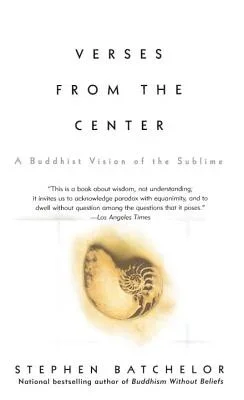
The quote:
“I do not walk between the step already taken and the one I’m yet to take, which both are motionless….
Is walking not the motion, between one step and the next? What moves between them?”
He continued: “There is no walking without walkers. And no walkers without walking.”
That reminds me of the line by the poet Yeats: “How can we know the dancer from the dance?”
On close examination, we notice that we cannot separate dancers from dancing, walkers from walking, breathers from breathing, eating from bowl washing. Ourselves from the moment, each other, the world.
Or the nameless monk from Joshu.
Let’s go back to our koan of the bowl, and its many layers.
According to the commentaries, the monk was a new arrival to the monastery. But he was probably an experienced meditator. He started his day by waking up at 4 in the morning to chant, followed by zazen, then a shared meal of rice gruel in silence with the other monks.
During these activities, we are told, the monks were in samadhi.
Samadhi. Don’t get hung up on the exotic zen term. Sensei Jean Gallagher unpacked that for us in a talk. It is not a state of mind. It’s doing nothing. It’s zazen.
As she put it, we are allowing “the whole shebang… all the sensations, perceptions, words, images, judgments and narratives.”
I bet everyone, even people who have never meditated, have experienced this flowing with reality. Even if only briefly.
You can experience it while walking in nature, or through the streets of the city, making works of art, being absorbed in music, or poetry, working with your hands or tools, cooking, eating, washing your bowls.
Or chanting…. “Form is exactly emptiness. Emptiness is exactly form” (from the Heart Sutra). “Two arrows meeting in mid-air” (from the Sandokai).
In his commentaries on this koan, Roshi Koun Yamada said that when you are eating your rice gruel, you are exhausting the entire universe. This is our essential nature.
A quote: “Your life is the continuity of standing up, sitting down, laughing, sleeping, waking up, drinking, eating, and, of course, being born and dying.”
Our monk wants to know more.
Is there a Zen secret, is there something to achieve? Has he achieved it? What more must he do? He asks, “I beg you, master, please give me instructions.”
He wants to get an A-Plus in Zen. In life.
Don’t we all?
Joshu replies, simply, “Have you eaten your rice gruel yet?”
He is not asking if the monk had enough to eat at breakfast.
He’s asking if the monk has seen through the whole shebang.
This might be a trick question.
“Yes, I have,” the monk says.
He’s stuck.
Joshu redirects his attention. Keep moving. Keep breathing. Wash away the traces.
“Being alive is enough.”
Just… this… ordinary ….moment.
You’ve had your breakfast.
Now wash your bowls.
I gave a version of this talk to my fellow Zen students on Nov. 18, 2025 at Still Mind Zendo in Manhattan.