Zen Talk: Why do we bow?
I want to examine something that was a barrier for me when I first came to zen. As our teachers say, every barrier is a gate. This gate came in the form of a question: What’s up with all the bowing?
Read MoreI want to examine something that was a barrier for me when I first came to zen. As our teachers say, every barrier is a gate. This gate came in the form of a question: What’s up with all the bowing?
Read MoreIn the middle of hurricane season during the 2020 pandemic, The New York Times sent remote workers a Jackery power station to weather any power failures. No blackout was going to stop the news.
Read MoreI mostly stopped using Twitter, now X, in the fall of 2023, after Elon Musk instituted changes to verification and the algorithm to make the site less useful to me. I had been on the service for 17 years and had more than 35,000 follower at one point. Of the X alternatives, I currently use BlueSky, Mastodon and Threads, although I will probably start phasing out my presence on the latter.
Read MoreText of a talk given on Oct. 19, 2023, at Still Mind Zendo in Manhattan, where I am a senior student.
Good evening. As I understand it, these senior student talks are meant to be words of encouragement about our practice. While I’m talking to you, I’m also talking to myself. This is my first talk, and I’m a little nervous, so thanks for showing up. In fact, that’s the title of this talk: “Showing Up.”
Read MoreI’ve had the honor and pleasure to meet the self-taught Buddhist scholar Bill Porter, who has been translating and writing for decades under the name Red Pine, at events sponsored in recent years at Still Mind Zendo in Manhattan. I own and recommend his books, particularly his translation of the heart sutra. A new documentary, “Dancing With the Dead: Red Pine and the Art of Translation,” is streaming online for $12 through Nov. 25.

I’m a longtime fan of Open Culture, which has a guide to a wide collection of thousands of free movies.
The categories include classics, indies, comedies and drama, Film Noir, horror, Hitchcock, Westerns, martial arts, silent films, documentaries, and animation.
The site can point you to much more, including free online courses, audiobooks, podcasts, ebooks and more.
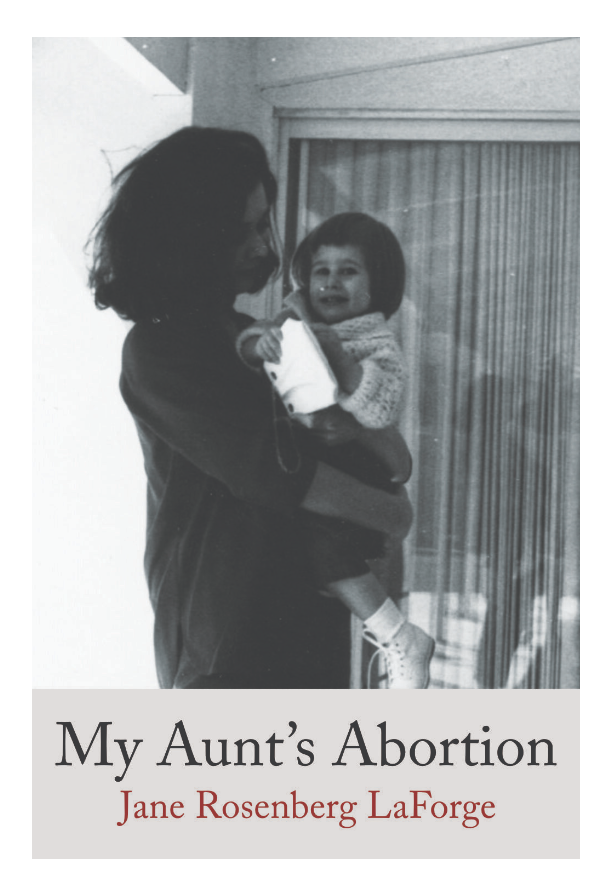
My Aunt’s Abortion, a series of poems and essays by my wife, Jane Rosenberg LaForge, details how an illegal abortion affected her family in the late 1960’s. It was published by BlazeVox books, a publisher of experimental fiction. You can order a copy directly from BlazeVox or through the bald devil’s website.. Jane also maintains a page on Facebook called “Writing in the Wake of Roe,” which tracks abortion news and events.
First, a hat tip to Jordan Harbinger, who mentioned Openaudible, a free audiobook conversion and management app, on his podcast. If you want to convert your Amazon audiobooks into files that can be used on any device, this is the app for you. Harbinger converts his then uploads them to Overcast.fm, my preferred podcast player (iOS only, sorry). You can use Overcast to remove dead air and speed up your listening to cut the time it takes to get through a book. And if you’re tired of giving your money to the bald devil’s website, and want to skip the need for a conversion app, Jason Kottke recommends the service libro.fm, where you can download DRM-free audiobooks.
“If your compassion does not include yourself, it is incomplete.”
― Jack Kornfield
I am always amazed when I learn that people do not save as much as they can in their workplace 401K, at least enough to get their company match, if any. Deferred contributions lower your income tax bill, and the money compounds free of taxes until retirement. In some cases, as with a Roth 401K or IRA, you can pay the tax now and then the gains compound without taxes in perpetuity.
Read MoreI retired in July 2024 after 27 years as an editor at The New York Times. Here is the draft of the remarks I gave at a newsroom toast in my honor.
Everyone leaves The Times sooner or later. No exceptions. The only question is whether you get to choose when and how. I’m choosing to leave at the top of my game. People have asked what I’m going to do. The short answer is: whatever I want.
Read MoreI’m resurfacing this well-received column I wrote in The Times in 2023. This summer I did two back-to-back silent Zen retreats, and I am glad I did, given the current news cycle. Free link, no paywall.
Read MoreIf you’re looking for holiday gifts, I have a suggestion. My wife, Jane Rosenberg LaForge, has written a terrific novel, “Sisterhood of the Infamous.” You can buy it on here. And if you’re interested in learning about her other novels and books of poetry, go to her site.

The writer Paul Graham summed up the problem: searching for the good books. “There are a huge number of books and only a small percentage of them are really good, so reading means searching,” he notes. “Someone who tries to read but doesn't understand about the need to search will end up reading bad books, and will wonder why people who read a lot like to do something so boring.”

I like speculative fiction, sometimes called “science fiction” or SF. I like to think about the future. One problem is that a lot of SF books are badly written. In fact, that’s a problem with books in general. Most of them are terrible.
So I am delighted when I find a really thorough list like this one: Reactor magazine’s list of the “most iconic speculative fiction books of the 21st century.” (I’ll even forgive that absurd phrase “most iconic.”)
“When we are perfectionistic, we tend to hold unreasonable expectations and exhibit high levels of rigid thinking and behavior. Often, these perfectionistic tendencies are turned inward, which is called self-oriented perfectionism. In other words, we apply these excessive standards and inflexible thinking to ourselves but not necessarily to others. If we are other-oriented in our perfectionism, we will project outward and target other people in our lives. Some of us are both self- and other-oriented perfectionists; they are not mutually exclusive.” Not surprisingly, this can be harmful to your relationships. This article has some advice. [Psychology Today]
“The point is not to perfect yourself. It is to perfect your love. Let your imperfections be an invitation to care. Remember that imperfections are deliberately woven into Navajo rugs and treasured in the best Japanese pottery. They are part of the art. What a relief to honor your life as it is, in all its beauty and imperfection.”
— Jack Kornfield, “The Tyrrany of Perfection”

If I ever got a tattoo (unlikely!), it would probably be an ensō. This is a symbol important in Zen Buddhism and Japanese ink painting.
The circle is drawn quickly and fluidly, in a single stroke.
“Once it’s drawn, there is no changing it. … the circle signifies unity and completion. Perfect balance. What makes the ensō more intriguing is that it is not perfect at all. It is rough, messy, and at times not even complete.” [Aly Juma]
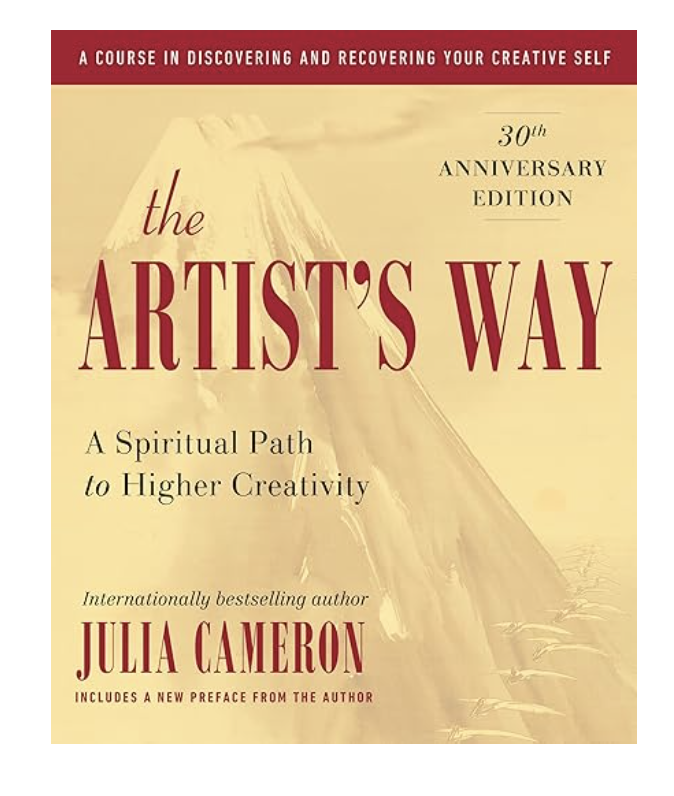
A self-help book from 1992, “The Artist’s Way” by Julia Cameron, has developed something of a cult following. This quote, shared by the podcaster Tim Ferriss in his weekly email “Five Bullet Friday,” captured my attention recently:
The perfectionist is never satisfied.
The perfectionist never says, ‘This is pretty good. I think I’ll just keep going.’
To the perfectionist, there is always room for improvement. The perfectionist calls this humility. In reality, it is egotism.
It is pride that makes us want to write a perfect script, paint a perfect painting, perform a perfect audition monologue.
Perfectionism is not a quest for the best. It is a pursuit of the worst in ourselves, the part that tells us that nothing we do will ever be good enough—that we should try again.
No. We should not.
— Julia Cameron
It’s a question that could change your life. The author of “The Subtle Art of Not Giving a F*ck” points out that our struggles determine our successes in life. If you want muscles and health, you have work your muscles and watch your diet. If you want money and success, you need to make sacrifices to get there. If you want happy relationships, you have to undertake the hard work of having relationships. [Mark Manson]
"I once said something in the zendo that upset a lot of people. I said, 'To do this practice, we have to give up hope.' Not many people were happy about that. But what did I mean? I mean that we have to give up this idea in our heads that somehow, if we could only figure it out, there's some way to have this perfect life that is just right for us. Life is the way it is. And only when we begin to give up those maneuvers does life begin to be more satisfactory."