The egotism of the perfectionist
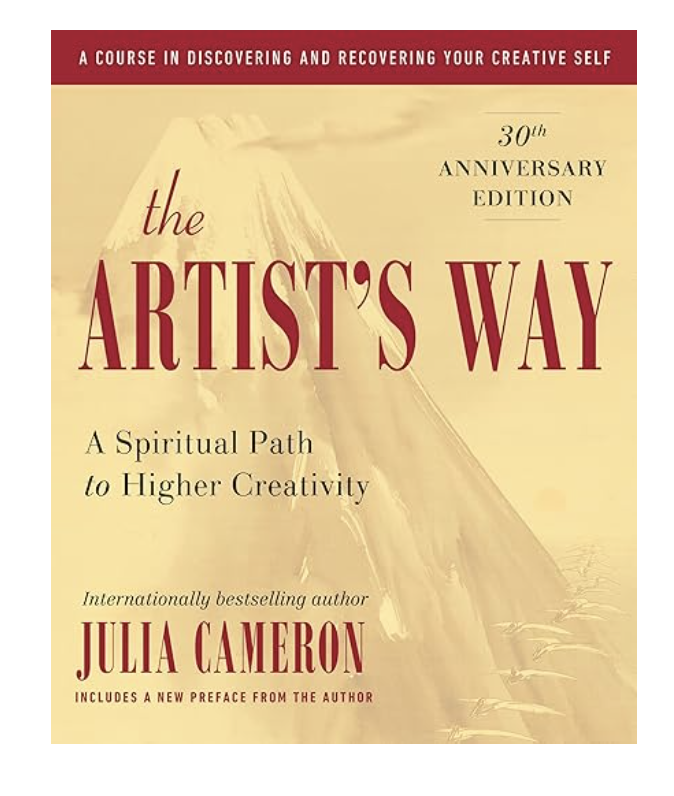
A self-help book from 1992, “The Artist’s Way” by Julia Cameron, has developed something of a cult following. This quote, shared by the podcaster Tim Ferriss in his weekly email “Five Bullet Friday,” captured my attention recently:

The perfectionist is never satisfied.

The perfectionist never says, ‘This is pretty good. I think I’ll just keep going.’

To the perfectionist, there is always room for improvement. The perfectionist calls this humility. In reality, it is egotism.

It is pride that makes us want to write a perfect script, paint a perfect painting, perform a perfect audition monologue.

Perfectionism is not a quest for the best. It is a pursuit of the worst in ourselves, the part that tells us that nothing we do will ever be good enough—that we should try again.

No. We should not.

— Julia Cameron
[Five Bullet Friday]

'How do you choose to suffer?'

It’s a question that could change your life. The author of “The Subtle Art of Not Giving a F*ck” points out that our struggles determine our successes in life. If you want muscles and health, you have work your muscles and watch your diet. If you want money and success, you need to make sacrifices to get there. If you want happy relationships, you have to undertake the hard work of having relationships. [Mark Manson]

'We have to give up hope'

"I once said something in the zendo that upset a lot of people. I said, 'To do this practice, we have to give up hope.' Not many people were happy about that. But what did I mean? I mean that we have to give up this idea in our heads that somehow, if we could only figure it out, there's some way to have this perfect life that is just right for us. Life is the way it is. And only when we begin to give up those maneuvers does life begin to be more satisfactory."

Charlotte Joko Beck, “Everyday Zen”

Whan that Aprill with his shoures soote

“The Wife of Bath is the first ordinary woman in English literature. By that I mean the first mercantile, working, sexually active woman—not a virginal princess or queen, not a nun, witch, or sorceress, not a damsel in distress nor a functional servant character, not an allegory. A much married woman and widow, who works in the cloth trade and tells us about her friends, her tricks, her experience of domestic abuse, her long career combating misogyny, her reflections on the aging process, and her enjoyment of sex, Alison exudes vitality, wit, and rebellious self-confidence.”

— An excerpt from “The Wife of Bath: A Biography,” by Marion Turner. [Lapham’s Quarterly]

A blog, back from the dead

Before Twitter and other microblogging platforms consumed my attention, I used a variety of blogging tools or platforms in the first decade of this century: Wordpress, Blogger, Blogspot, Tumblr, Posterous and probably some I’ve forgotten. Now I use Squarespace, mainly to house this leftover material and to keep this domain and About bio page alive to verify my identity on other platforms. When I shifted to Squarespace, I migrated material that seemed worth saving but have not really done any blogging since. These are the remainders, frozen in blog amber. Now that I’ve retired, I’ve done some cleanup on this site and plan to start blogging again occasionally.

Read More

It's Just a Watch, but I'm Getting One

Some friends have been shaking their heads because I have been unapologetic about my intention to get an Apple Watch. I even woke up at 3 a.m. to place the order. It is expected to arrive sometime in the next couple of weeks: a 48-millimeter stainless steel watch with a classic buckle (like the leather band on this pictured 38-millimeter model). Technically, it's a belated birthday gift from my wife. (Buy her book so she can afford to pay this off.)

Read More

iOS Apps I Actually Still Use, 2014

Some people have found the older installments of this list to be helpful, so I figured it was time for an update. The Apple App Store for iOS continues to suffer from discoverability and search issues. App prices have dropped, but it can still be costly to try out new mobile software. I am mainly focused here on the iPhone, but many of these apps work on iPads and have Android or other non-Apple versions versions.  I pay for these out of my own pocket and do not accept compensation related to these, with the exception of the two mentioned here that are offered by my employer. The order is roughly based on frequency of use. 

Read More

Saving It For Later: Text Workflows

I mostly read Twitter on my iPhone using the Tweetbot app. When I see an interesting article, but don't have time to read it, I usually save it to Instapaper, the read-later service. There are plenty of such services, but Instapaper was the first and best, and I like that I have access to my articles on many devices, from my computer to my iPhone to my two iPads (a mini for work, an Air for home pleasure use, like movies and games).

Read More

This Old Book: 'The New York Trilogy'

IMG_2457.jpg

I bought this Penguin edition in the mid-1980s at Louie's Bookstore Cafe on Charles Street in Baltimore. The paperback combined Paul Auster's three surreal detective stories about New York. I have not read all of his subsequent novels, but these spoke to me. For some reason, ever since I was a child, I have enjoyed stories about mysterious disappearances. I also enjoy literary twists on genre fiction (mysteries, science fiction, fantasies). I remember the jacket copy for "Ghosts" was particularly intriguing: "Blue, a student of Brown, has been hired by White to spy on Black. From a window of a rented room on Orange Street, Blue keeps watch on his subject, who is across the street, staring out of his window." But a passage in the third book, "The Locked Room," probably sums up how I feel about Auster's work. The narrator finds a notebook belonging to a writer who has vanished:

If I say nothing about what I found there, it is because I understood very little. All the words were familiar to me, and yet they seemed to have been put together strangely, as their their final purpose was to cancel each other out. I can think of no other way to express it. Each sentence erased the sentence before it, each paragraph made the next paragraph impossible. It is odd, then, that the feeling that survives from this notebook is one of great lucidity. It is as if Fanshawe knew his final work had to subvert every expectation I had for it.

    This Old Book is a series of posts about books that have survived many purges from my shelves over decades. It used to be a Tumblr, now archived here.